Breaking the Silence: Bangladeshi Students Open Up About Menstruation
Menstruation. A natural part of life, yet one that in many communities is still spoken about with embarrassment or not at all. Only a few years ago, many students in Bangladesh could not have imagined talking openly about menstruation. Today, they are able to debate the topic with confidence, listen to others, and seek common ground.
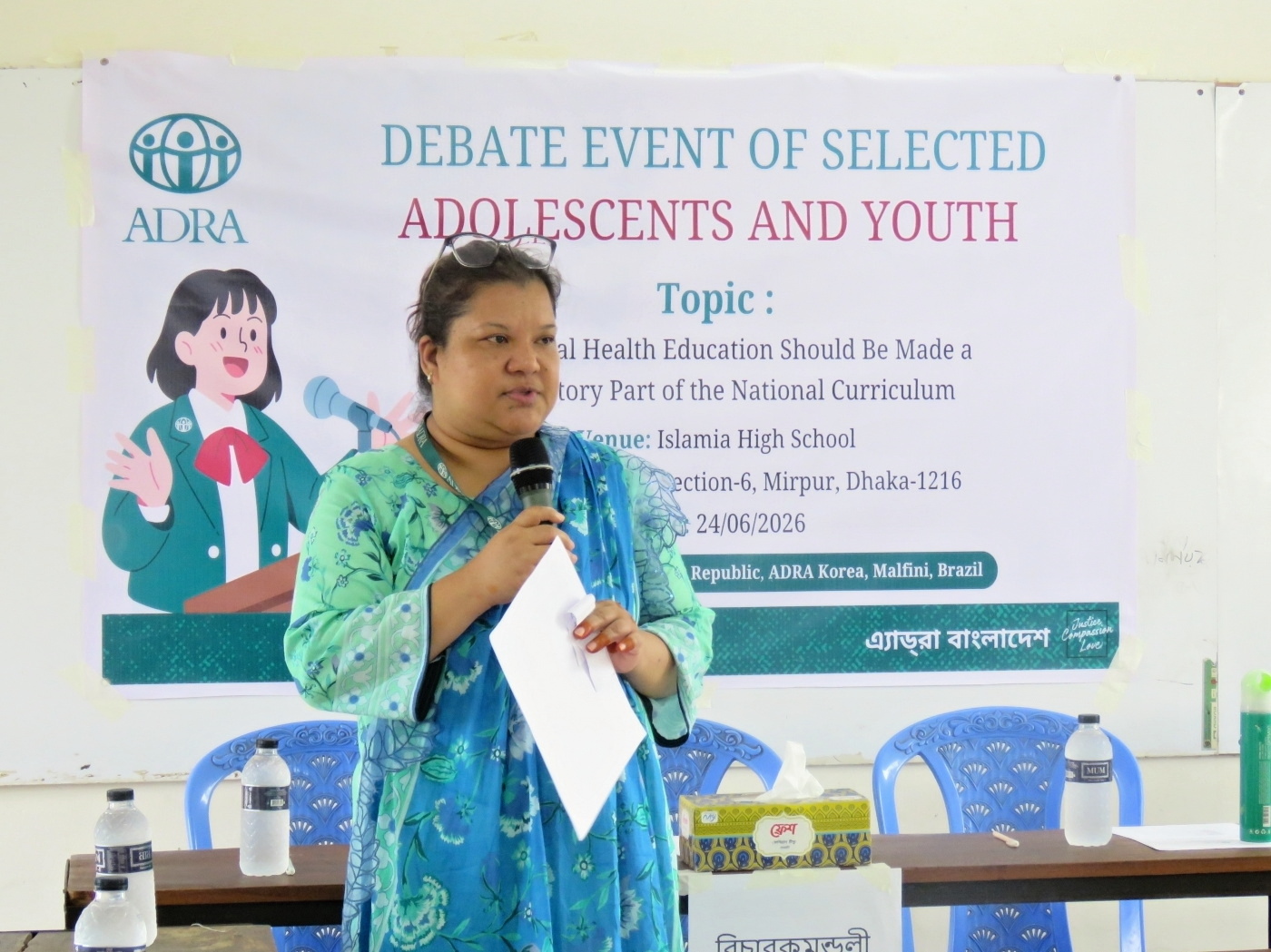
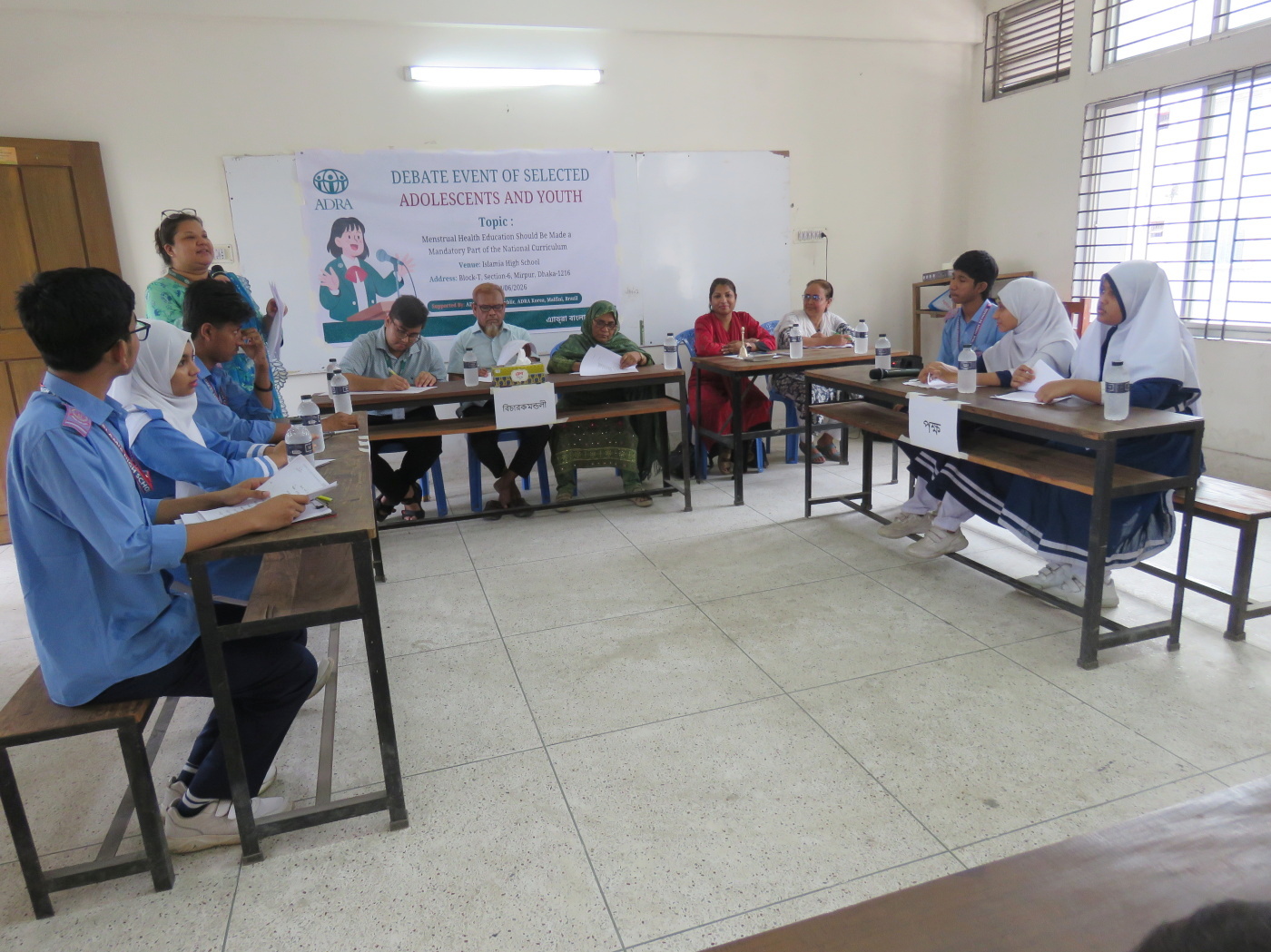
Students at the ADRA Chalantika slum education centre were given the opportunity to open up this sensitive topic during a debate competition, helping them develop their debating skills, listen to others, and formulate their own opinions.
The topic of the debate was:
"Menstrual Health Education should be made a mandatory part of the National Curriculum."
Young People Given the Space to Speak About an Important Topic
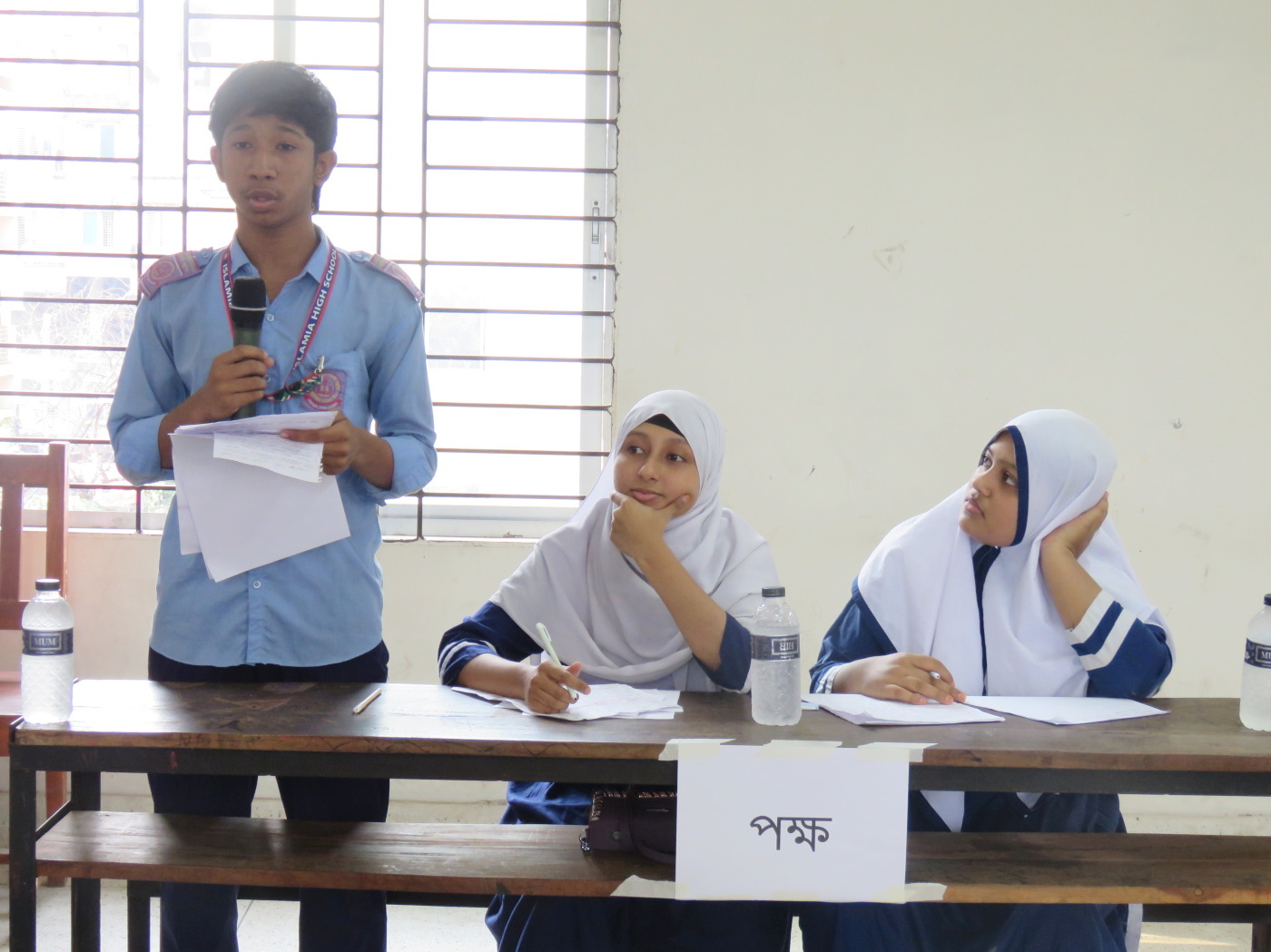
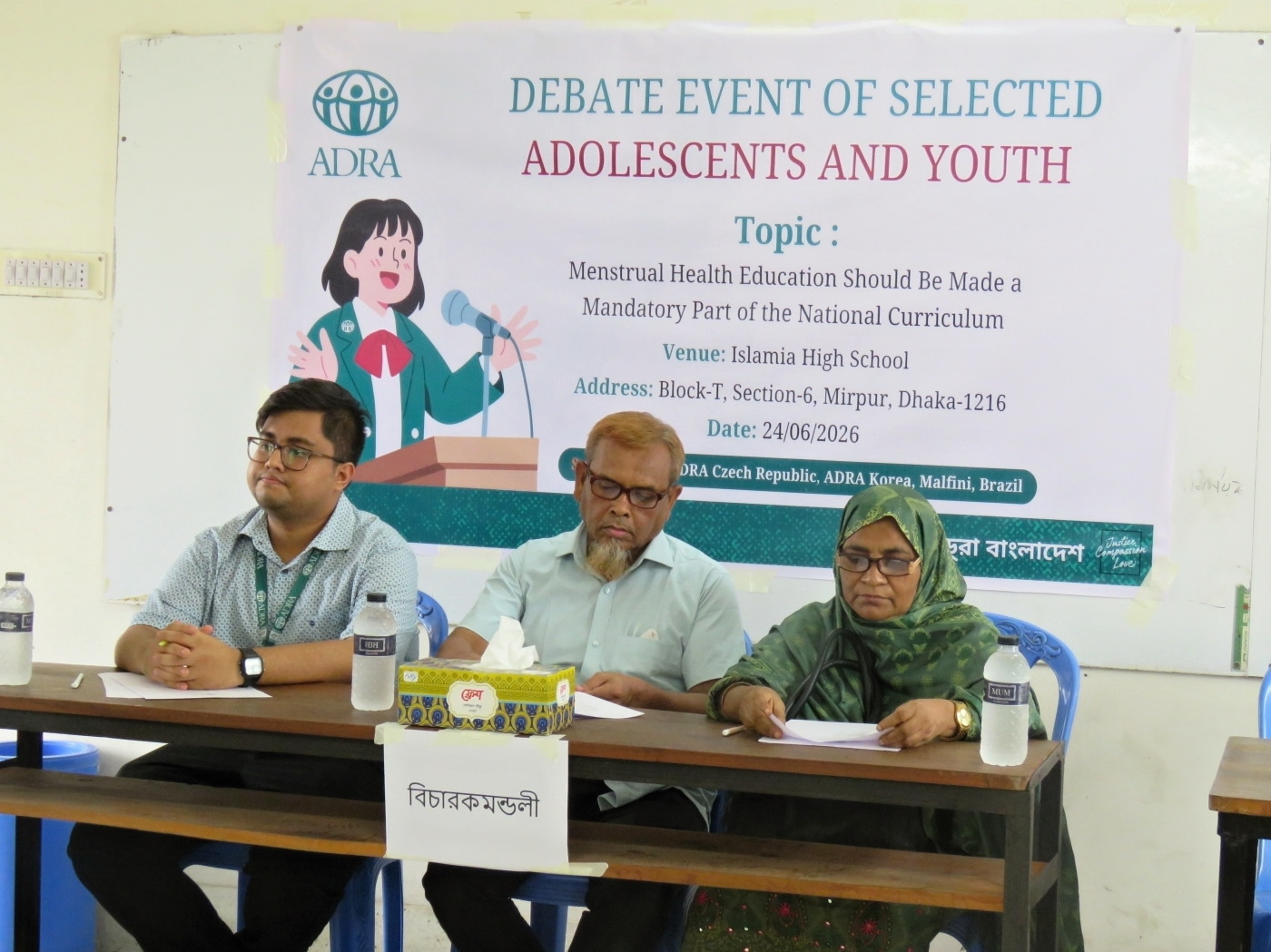
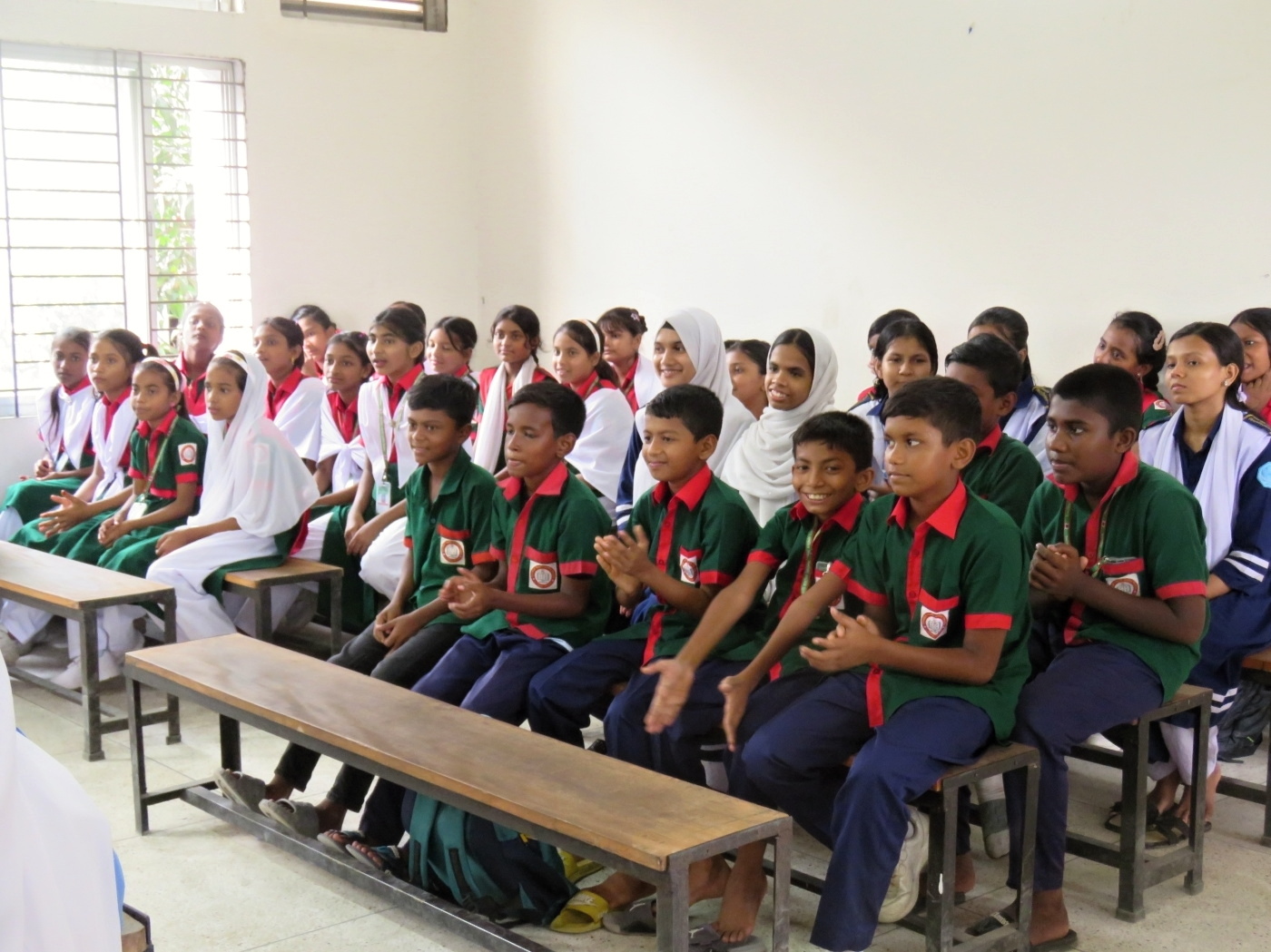
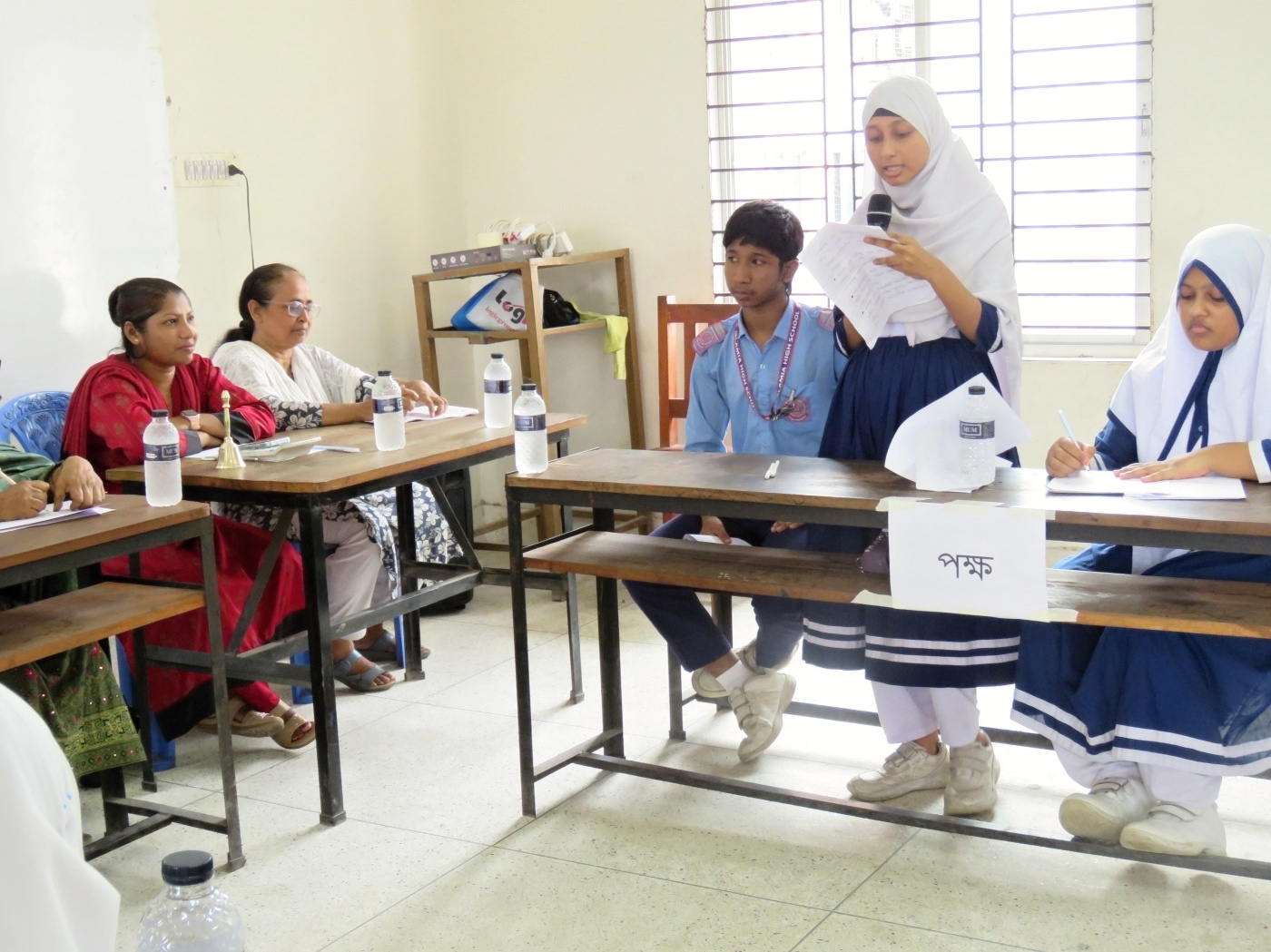
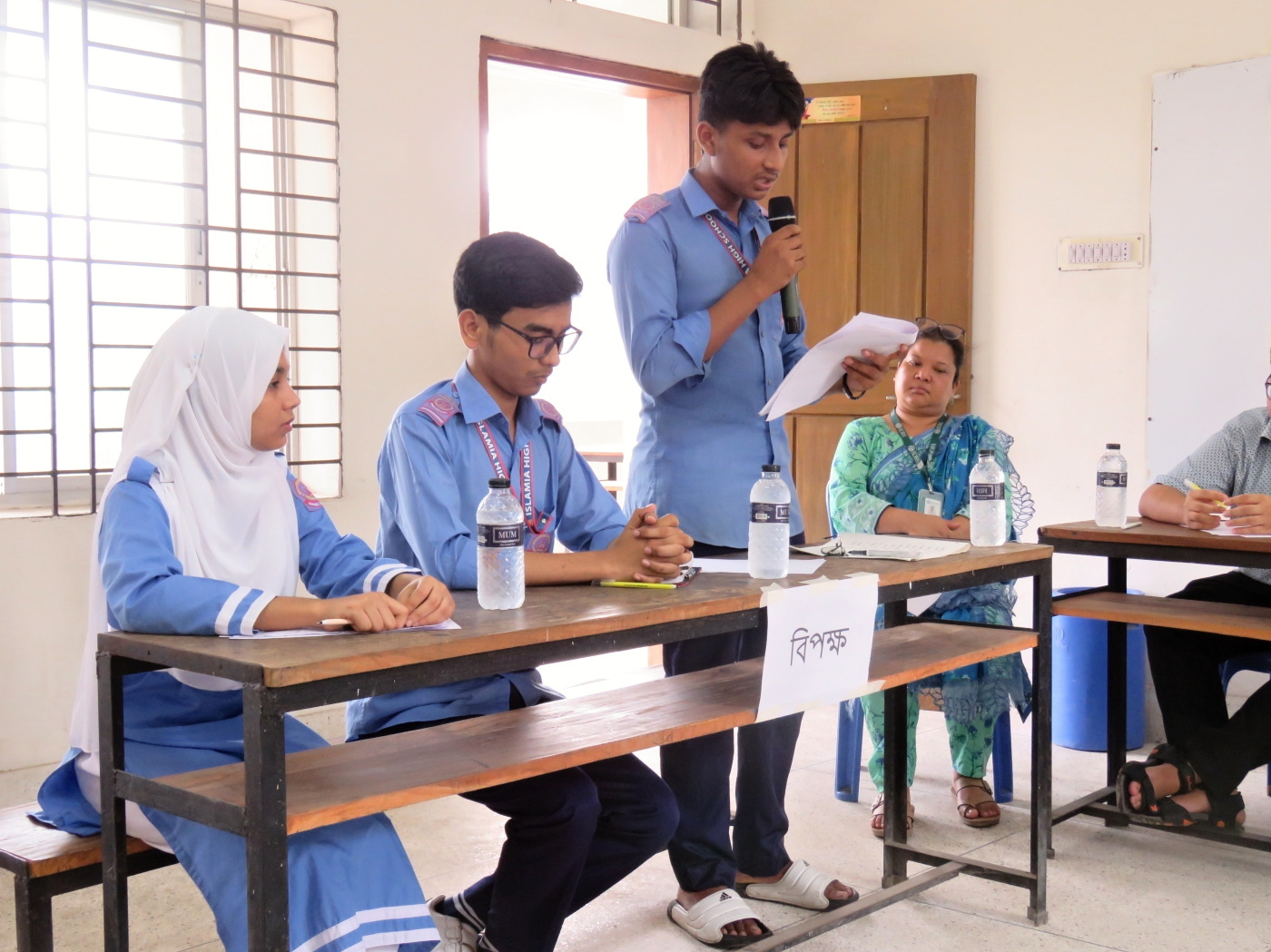
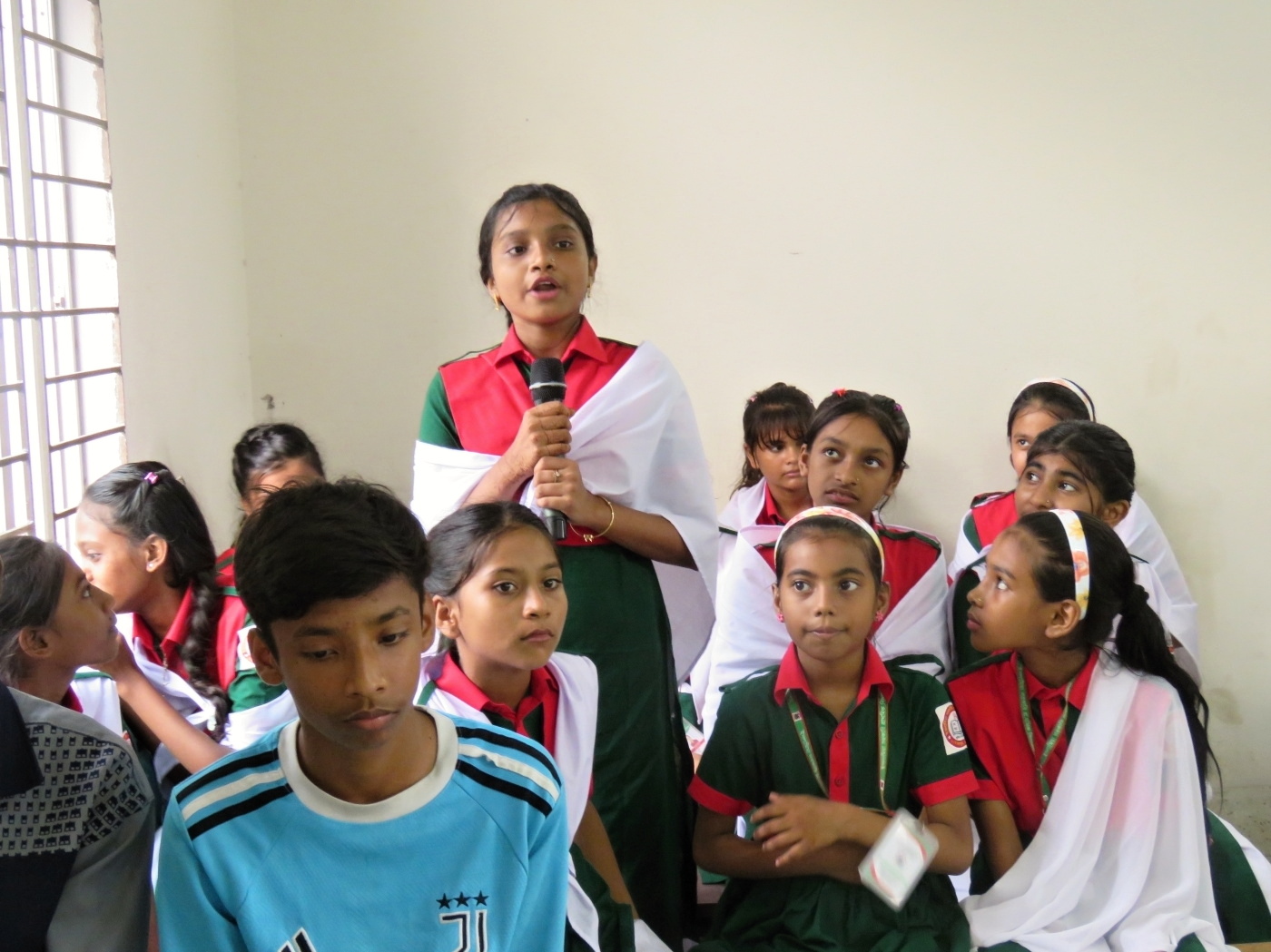
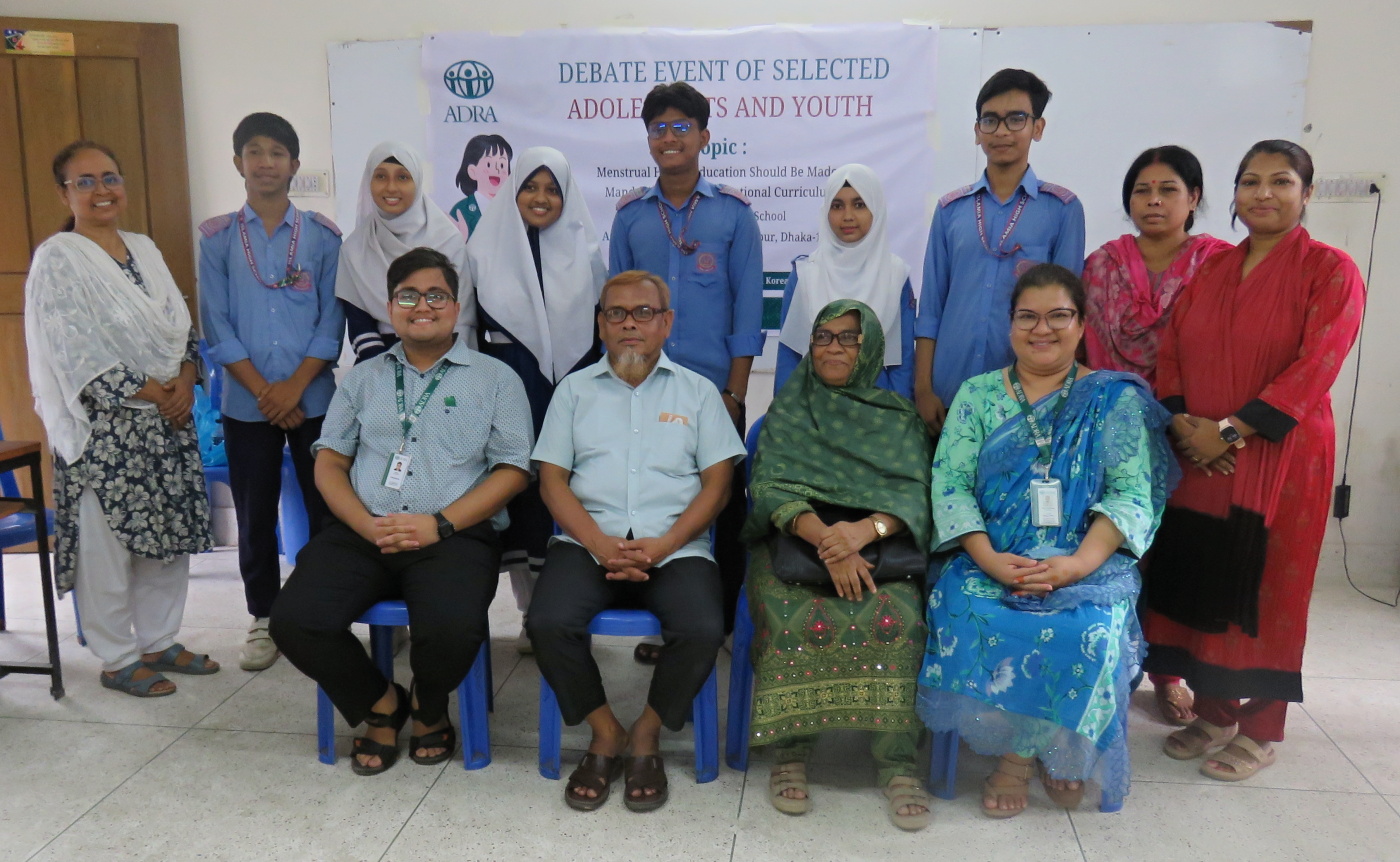
Six students took part in the debate, divided into two teams – one supporting the motion and the other opposing it. Speaking before an audience of 50 attendees, most of them fellow students, they presented their arguments, responded to opposing views, and demonstrated that even sensitive topics can be discussed with respect and without prejudice.
The debate was not merely a competition in debating. Above all, it was an opportunity to show that young people can gain accurate information, form their own opinions, and actively contribute to positive change within their community.
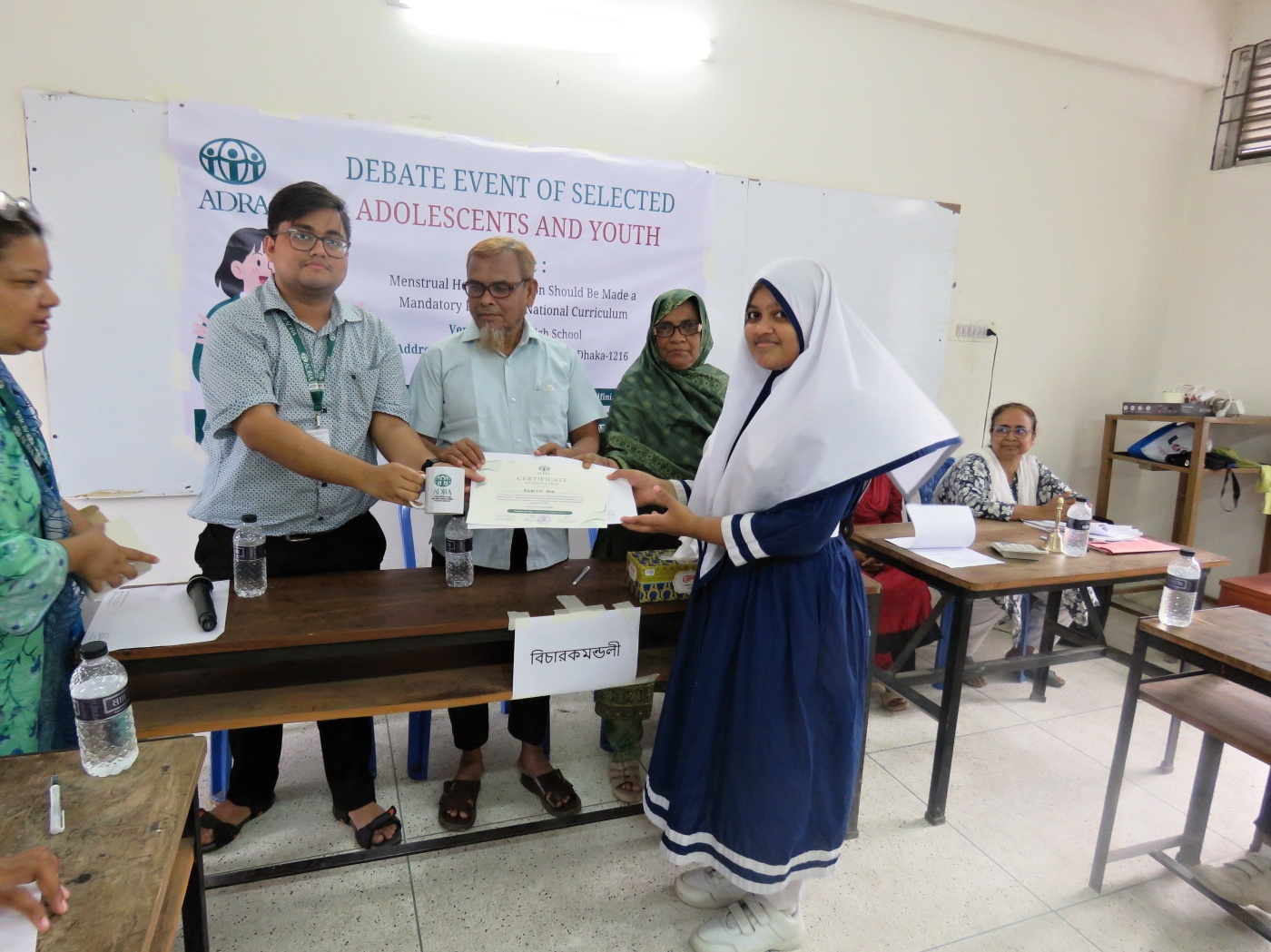
After the teams were assessed on the quality of their arguments, presentation, delivery, and rebuttal skills, the opposition team emerged victorious. The Best Speaker award went to student Kabita Mim for her persuasive presentation and the strength of her arguments.
A Shift in Perspective Across Generations
The importance of activities like this is best illustrated by the participants themselves.
 Headteacher Rashida Begum (58) described how significantly attitudes towards the subject have changed over the years: "When I was a student, we could not imagine talking about menstruation in public. Even 15 years ago, it was still considered taboo. I am delighted that attitudes are changing and that we are breaking down these social barriers."
Student Sathi (16) also welcomed the opportunity to learn more and discuss the topic openly: "Thanks to the debate, I understand the topic much better. If we were taught about menstruation as a normal part of school education, everyone would realise that it is a natural process, and people would finally stop feeling ashamed."
Education That Changes Attitudes
Menstrual health is not merely a matter of health. It is also closely linked to education, self-confidence, and equal opportunities. A lack of accurate information can give rise to myths and feelings of shame, negatively affecting the lives of girls and society as a whole.
The entire community needs to understand menstrual health – girls, boys, parents, and teachers alike. Only through accurate information and open dialogue can we gradually remove the barriers that prevent people from talking about important issues.
Activities like these demonstrate the true purpose of education. It is not just about knowledge gained from textbooks, but also about developing critical thinking, expressing one's own opinions, and building the confidence young people need to make a positive difference in their communities.
Through the Chalantika programme, children and young people in Bangladesh gain not only access to education but also the opportunity to develop their skills and find their own voice.
Give the Gift of Education. Give the Gift of a Future.
Thank You!